
Windowsill and radiator: how not to lose heat and not to damage the sill
A handsome wide windowsill above a radiator is often the reason a room is cooler than it should be and the windows mist up. The sill itself is not to blame: it blocks the path of warm air. We explain in plain words how radiator heat works, how to check it in your own flat and how to fit the sill so that you get both the looks and the heat in the room.
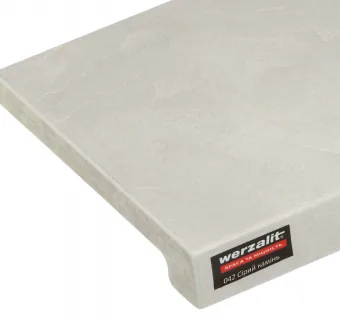
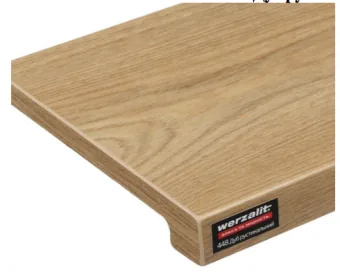
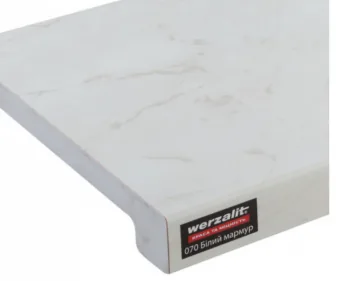
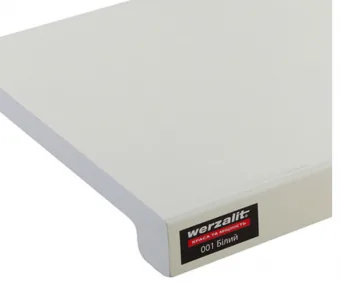
How the heat travels from a radiator
A radiator warms the air next to it. Warm air is light, so it rises along the wall and the window, cools at the cold glass, sinks and returns to the radiator. This loop is called convection and it is what heats the room. The warm stream along the window also keeps the glass from misting.
The sill lies right in the path of this stream. If it covers the radiator completely and tightly, the warm air hits the slab and spreads out under it: less heat reaches the room and the glass.
What happens when the radiator is covered
- The room warms up more slowly and the radiator has to work longer (and you pay for heat that is stuck under the slab).
- The glass gets less warm air, so the risk of misting and condensation grows, and with it mould on the reveals.
- Warm air collects under the sill and dust and moisture settle on the underside of the slab.
A simple check: is your sill in the way
- Wait for the heating season and a cold day.
- Hold your palm above the sill right at the window: you should feel a warm movement of air at the glass.
- Or hang a light paper strip on a thread above the sill: if it sways upwards, the air is moving.
- If it is cold at the glass but very hot under the sill, the flow is blocked: you need a gap or grilles.
Three ways to solve it
- A gap above the radiator. Leave a noticeable gap between the top of the radiator and the sill: usually at least 5 cm is advised, check the exact value in the heating design or ask the installer.
- Ventilation cut-outs and grilles. If the sill is wide and covers the radiator, cut-outs for grilles are made in the slab above the radiator: warm air passes through them. A grille cut-out costs 50 UAH each.
- The width of the sill. Do not take a width larger than needed for a 30–50 mm overhang: the narrower the sill, the freer the path for air. How to calculate the width is in the article “How to measure a window and choose a windowsill”.
Fitter’s tipIf you really want the sill wide (for example as a table), make a long grille cut-out above the radiator: the heat goes up while the slab stays in place.
Kinds of radiators and what to do with them
| Radiator type | Feature | What to do with the sill |
|---|---|---|
| Cast-iron “accordion” | Deep, heats by convection and radiation | Leave a gap, grilles optional |
| Steel panel | Thin, heats mostly by convection | The gap and cut-outs matter especially |
| Aluminium or bimetallic sectional | Gives a lot of heat upwards | A gap and grilles |
| A convector in a niche or the floor | Works only through the movement of air | The sill must leave a passage for the air |
If you are unsure what radiator you have and how best to fit the sill, send the manager a photo.
Cut-outs for pipes and a radiator: how to do it right
If heating pipes come up through the slab, cut-outs are needed. To make them fit perfectly, do this:
- Measure the distance from the wall and from the side reveals to the axes of the pipes and their diameters.
- Make a paper template and test it in place.
- Allow a small gap around the pipe (a few millimetres): it is needed for expansion and installation and is later hidden with a decorative cover or sealant.
- Order the cut-out while the sill is being prepared: this way the cut is clean, without chipping.
For complex shapes there is a template cut-out (40 UAH per side) and a U-shaped cut-out (100 UAH each). All of this is part of the cutting services.
- For grilles state in the order: the size of the grille, the offset from the edges and from the wall, the quantity.
- Mark the pipe axes from two planes (the wall and the side reveal) and the diameter including insulation.
- While the final wall finish is not done, leave an allowance at the places of the cut-outs: fitting is easier than redoing.
Curtains and a sill above a radiator
Even a perfect sill will not help if long heavy curtains hang below or level with it: they cover the radiator and block the flow just like a slab. Choose curtains above the sill or roller blinds and do not let tulle hang onto the radiator.
Will the sill withstand the heat of a radiator
A Werzalit sill is designed for heat: the manufacturer states that brief exposure up to 180 °C leaves no marks. You do not have to fear the heat of a radiator. The point of the gaps and grilles is different: not to protect the sill but to keep the heat in the room and protect the glass from condensation.
- A reflective screen is often placed behind a radiator and a small gap is kept between the radiator and the wall: the heat output into the room is then higher.
- State the levels in the project: the top of the radiator, the underside of the sill, the height of the gap: then the fitters will not decide it by eye.
Frequently asked questions
Can I fit a windowsill tight against a radiator?
It is better not to: leave a gap above the radiator so that warm air can rise to the glass and into the room. If the sill is wide, provide grilles.
Is a grille needed if the sill is narrow?
If the sill does not cover the radiator, no grille is needed. It is needed when the slab is right above the radiator.
What should I do about heating pipes?
Make cut-outs for the pipes using a template and leave a small gap around them. You can order the cut-outs while the sill is being prepared.
Will the heat of a radiator damage the sill?
No: according to the manufacturer Werzalit withstands up to 180 °C briefly. The heat is dangerous not for the sill but for your room if the air is blocked.